Designing an interactive “Deep Earth Explorers” Research Exhibition for the Sedgwick Museum of Earth Sciences:
Led by Dr Sanne Cottaar, the Deep Earth Explorer research team and the Sedgwick Museum of Earth Sciences wanted to design and deliver a hands-on interactive research exhibition, alongside a programme of public and school events and activities. I was brought on to coordinate the resourcing of the project, communicate across stakeholders, and make the research and education accessible through our programme design by employing evaluation and science capital tools. The design of the overall exhibition was put together by Exhibition and Displays Coordinator, Rob Theodore. Due to the pandemic the public events, school, and research exhibition programme have been adapted to be a digital and online experience with teaching, and additional games, and exploration resources available on the Deep Earth Explorer website.
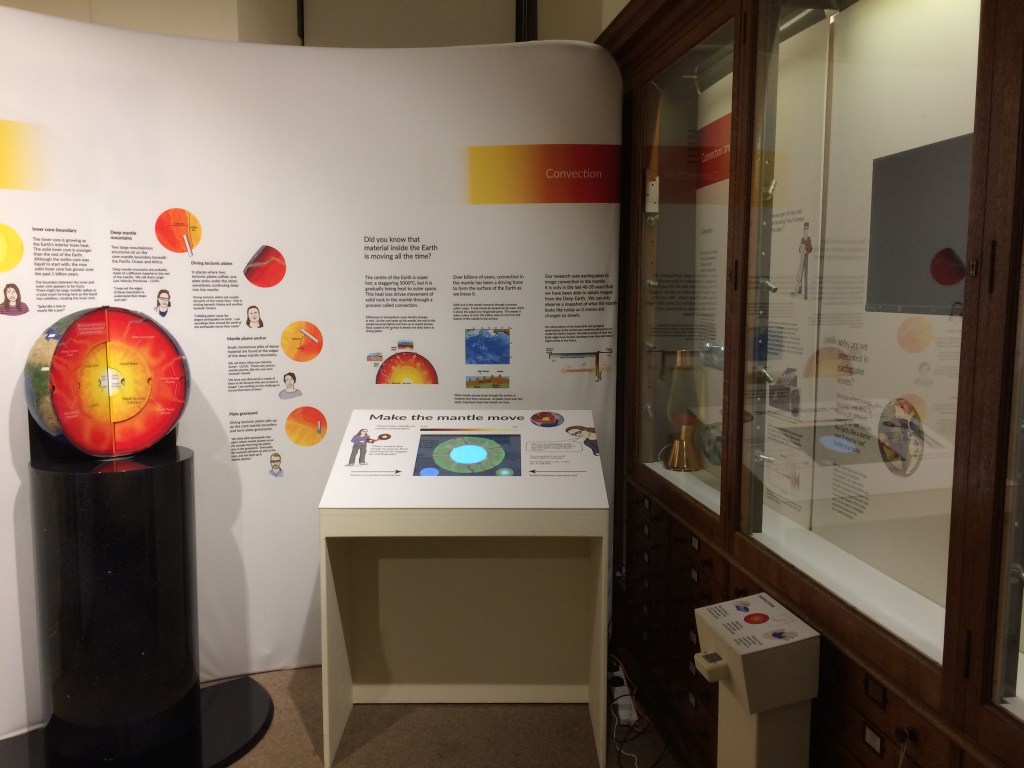
Museum narrative and museum public designing their own experience
Rather than just communicating out core communication messages in the research exhibition, the museum public were encouraged to feedback on scientific literacy; evaluating the research narrative, language, and visual elements in the exhibition. As a result the exhibition narrative in the above picture focussed on the following areas:
- Introduction and why the research team are interested in the deep Earth
- A timeline of deep Earth discoveries
- The Earth is more than a set of a simple layers (“Earth Model” physical exhibit)
- Material is moving and changing with time (“Make the Mantle Move” digital exhibit)
- Despite earthquakes being destructive events on the surface they provide the “eyes” necessary to see deep inside the Earth (“Explaining Waves” digital exhibit)
- Life as a Researcher comic strip
The Earth Model
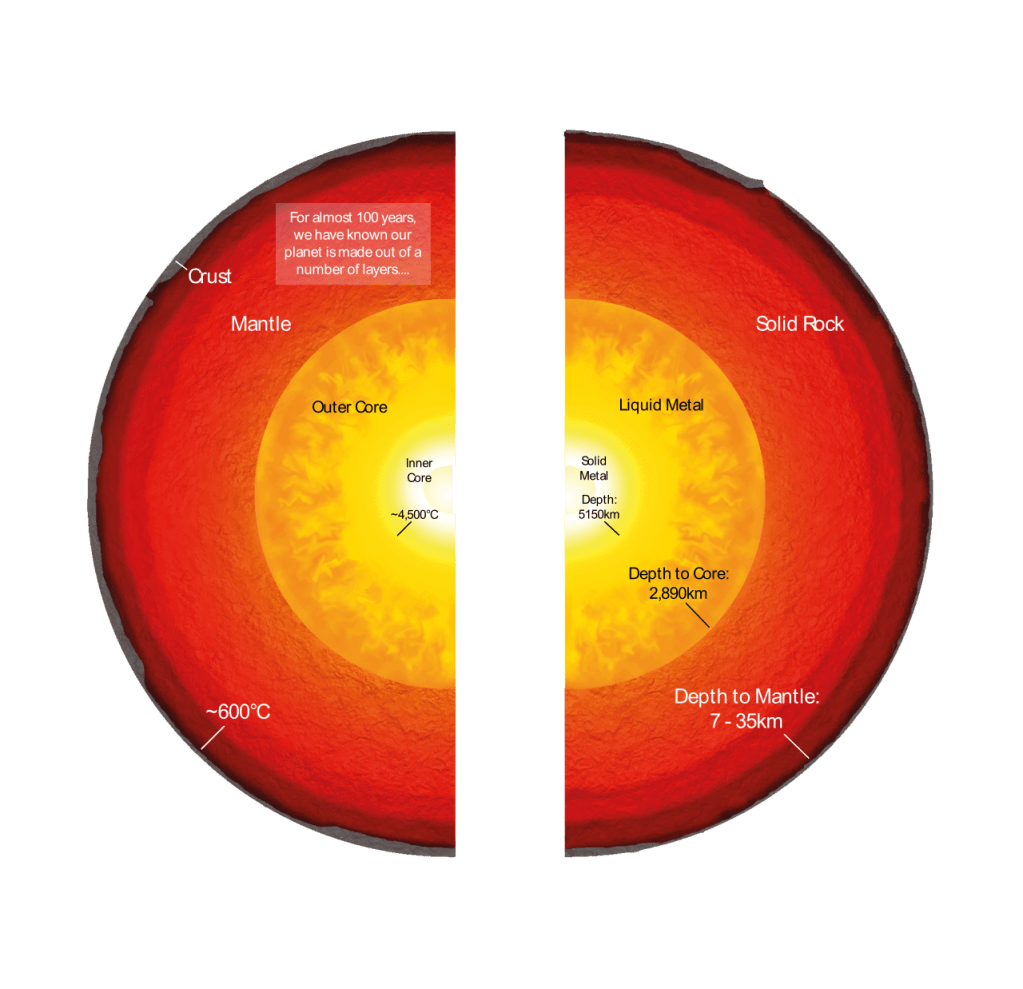
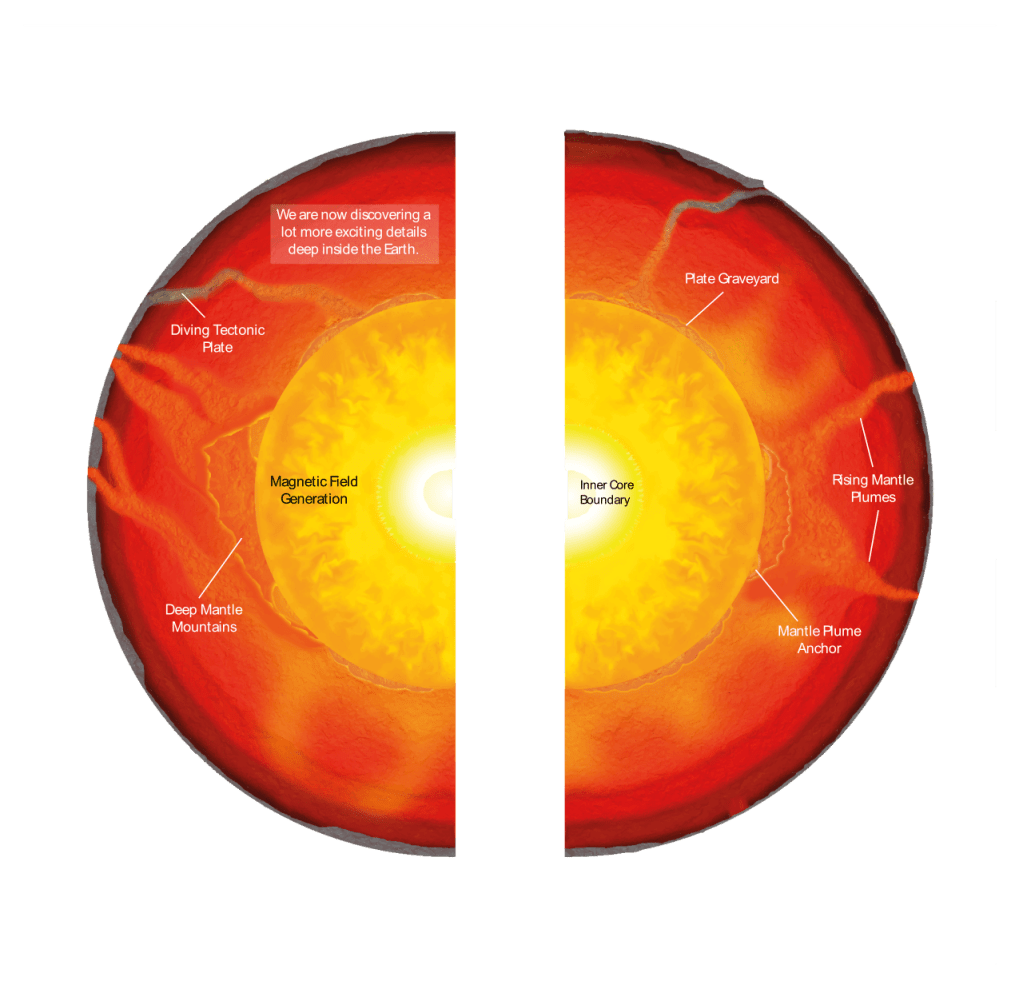
Created with Amalgam Model Makers the Earth Model is read like a book, wherein the museum public can turn the panels to reveal hidden details. The Earth Model panel on the left below opens to show the graphics on the right. The museum public helped create new memorable ‘nicknames’ for notable Deep Earth Explorer research with LLVPs becoming “deep mantle mountains” and ULVZs “mantle plume anchors.” The online exhibit below is designed to “zoom” deep into the Earth images below using a mouse or trackpad. This enables investigation of features and discovery of key facts around distance to the core, state of material and temperature inside the Earth.
Explaining Waves
Despite earthquakes being destructive events they provide “eyes” to see inside the Earth. Dr Alistair Boyce created a set of videos to explain the different types of earthquake waves the team are interested in studying. The waves can be triggered on a Raspberry Pi and have pictures on the key tags, which show where they are found in the deep Earth.
Life as a Researcher
We found that the museum public were very interested in what deep Earth researchers do day-to-day. Dr Gautier Nicoli turned the whole team into cartoons to tell the story of a day in the life of Deep Earth Explorers. He also made cartoons, which the Deep Earth Explorer used on our instruction panels, and across the exhibition space. Our comic strip, Life as a Researcher, from our online exhibition Deep Earth Explorers gives an example of what a research project life cycle might look like. A lot of our work involves reading papers published in academic journals, conducting our own research, and communicating our findings to other scientists and the public.
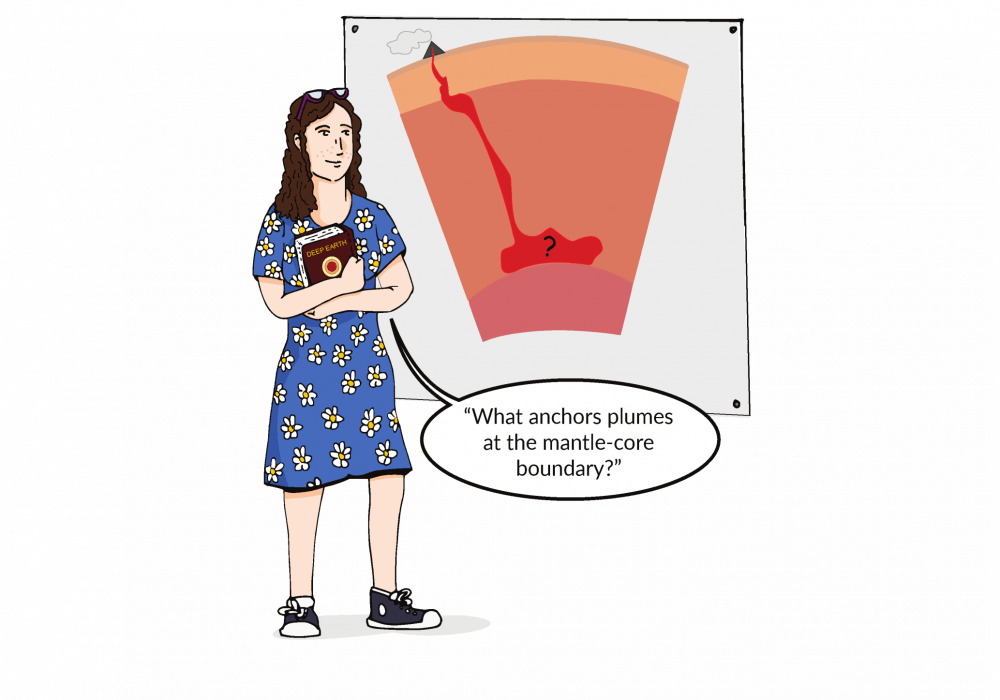
1. Every research project starts with a question the Deep Earth Explorers want to answer… 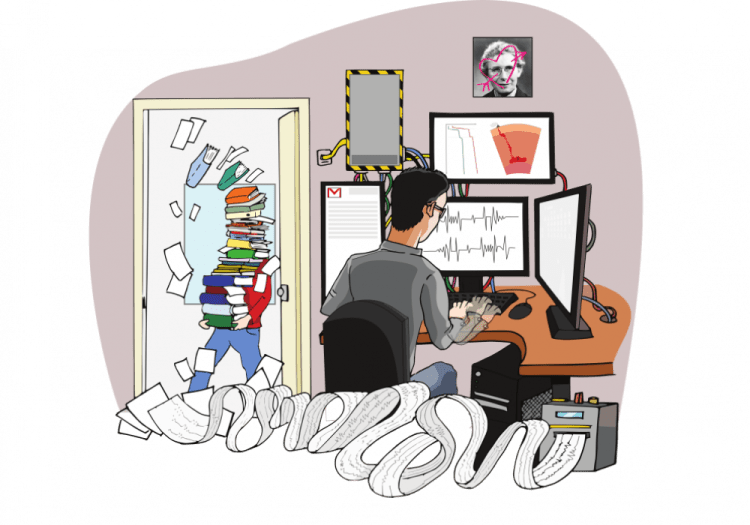
2. First, they search for some seismic waves that sense the area of the core-mantle boundary. 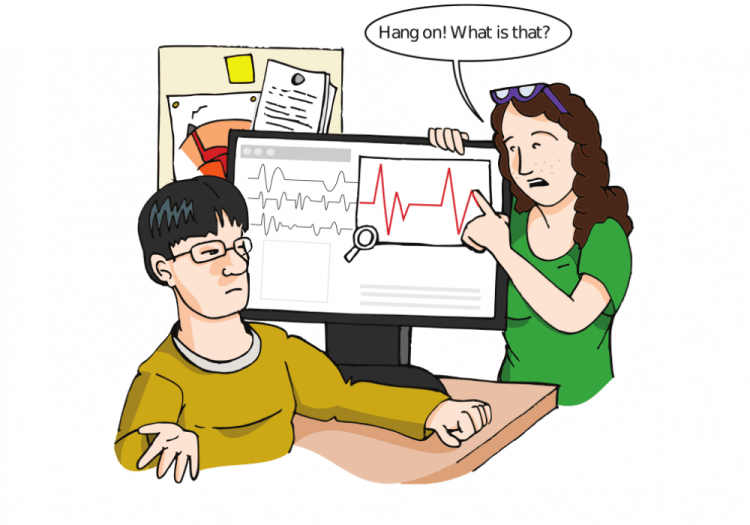
3. One of the explorers spots something unusual in the wave-forms. 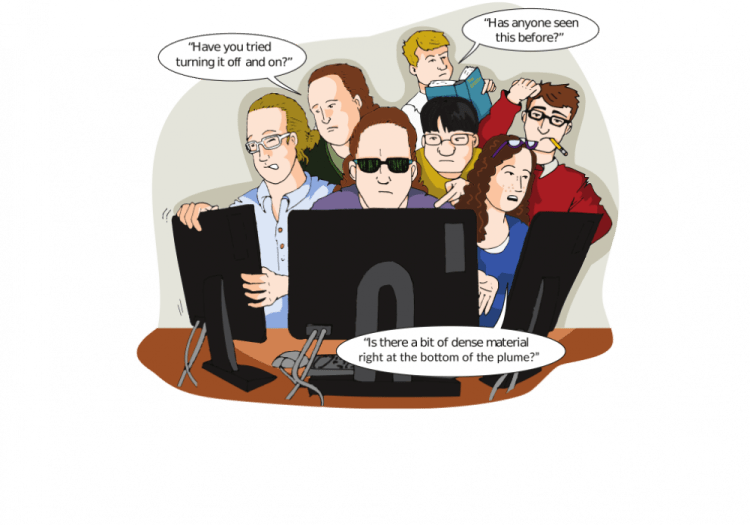
4. Luckily the rest of the explorers are happy to share ideas. 
5. Their ideas lead to exciting new results. 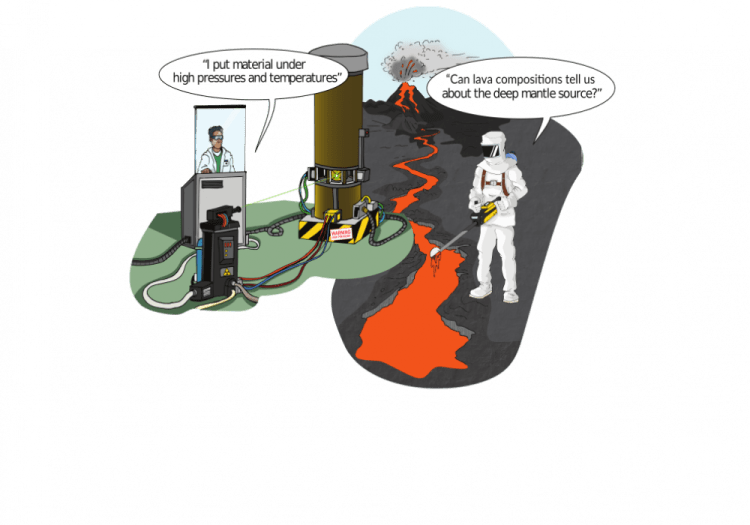
6. The Deep Earth Explorers collaborate with scientists in other fields to check their interpretations. 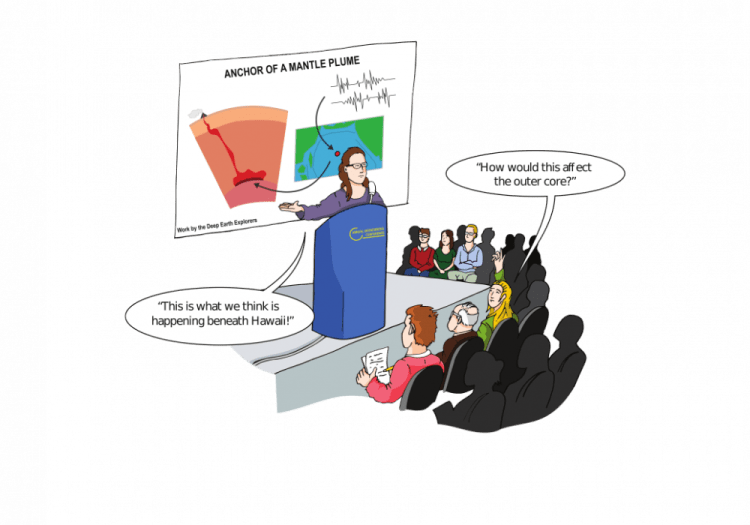
7. They explain what they found out to other scientists at conferences. 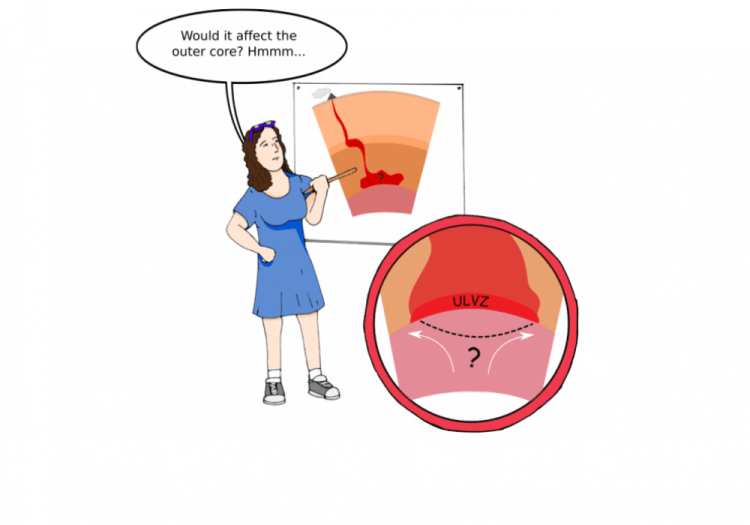
8. …and this always leads to new questions and research projects.
Our research process and engagement was published in the Royal Astronomical Society’s Astronomy & Geophysics.
 Jess Bartlet